A long official neighbourhood
Related games, a disputed name, and a French rattle of dice
Official pages place backgammon among older board games. They do not, on this desk, get to collapse into one origin story.
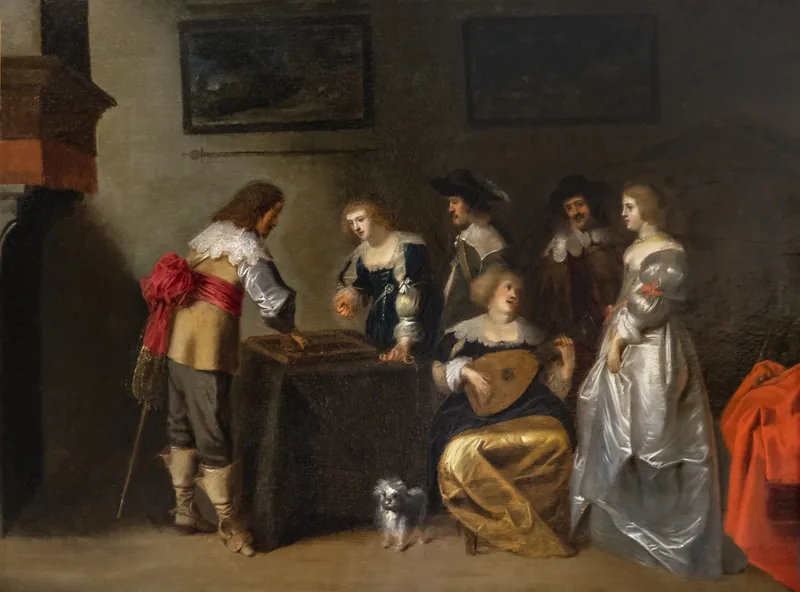
The 1911 Encyclopaedia Britannica says the game “is said to have been invented about the 10th century (Strutt).” [source] A similar game, Ludus duodecim scriptorum, “the twelve-line game,” “was known to the Romans,” and Plato is cited for a game in which dice were thrown and men were placed “after due consideration.” [source] Chaucer, the same article says, alludes to a game of “tables,” played with three dice. [source] “The French name for backgammon is trictrac, imitative of the rattle of the dice.” [source] Van der Laemen’s oil, painted between 1630 and 1651, is officially titled both “Joueurs de tric-trac” and “Backgammon players.” Both titles stay on the caption. The etymological sentence is not used to retitle the painting.
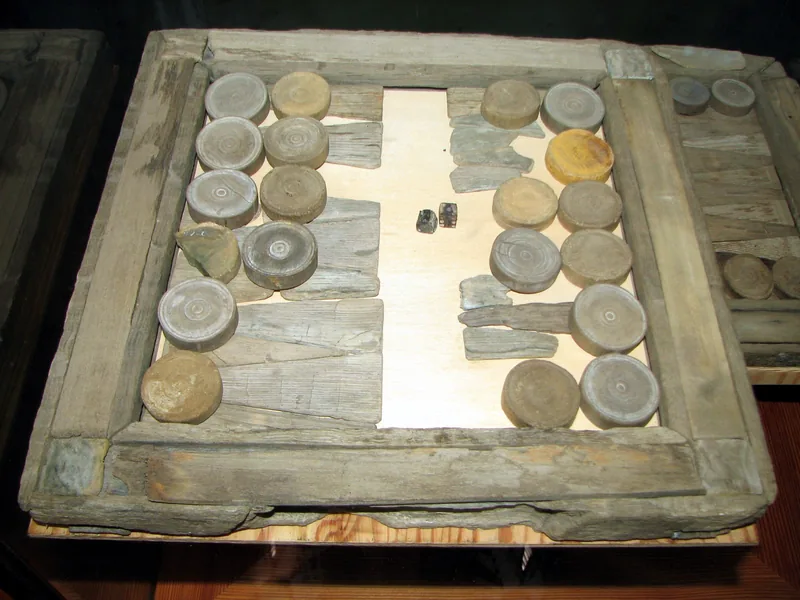
The World Backgammon Federation, in wording captured on 16 November 2026, is careful in a different official way. The Royal Game of Ur, Senet and ludus duodecim scriptorum are earlier or related games; backgammon was inspired by these and evolved into the modern form. [source] That captured page does not say that backgammon is Senet or Ur, and this desk does not say it either.
Encyclopaedia Britannica, in wording captured the same day, is warmer toward the Roman game: precursors “may date from as early as 3000 BC,” and the Romans played Ludus Duodecim Scriptorum, “identical, or nearly so, to modern backgammon.” [source] “Identical, or nearly so,” is official Britannica wording. “A similar game” is official 1911 wording. “Inspired by” is the captured WBGF wording. They are three official temperatures, not one history.
Even the name is officially disputed. The 1911 article’s preferred derivation is “probably Saxon — baec, back, gamen, game; i.e. a game in which the players are liable to be sent back.” It also records a Danish tray-and-game derivation, and a Welsh “little battle,” and does not pretend the argument is over. [source] A man sent back to the bar, in other words, may already be hiding in the name.
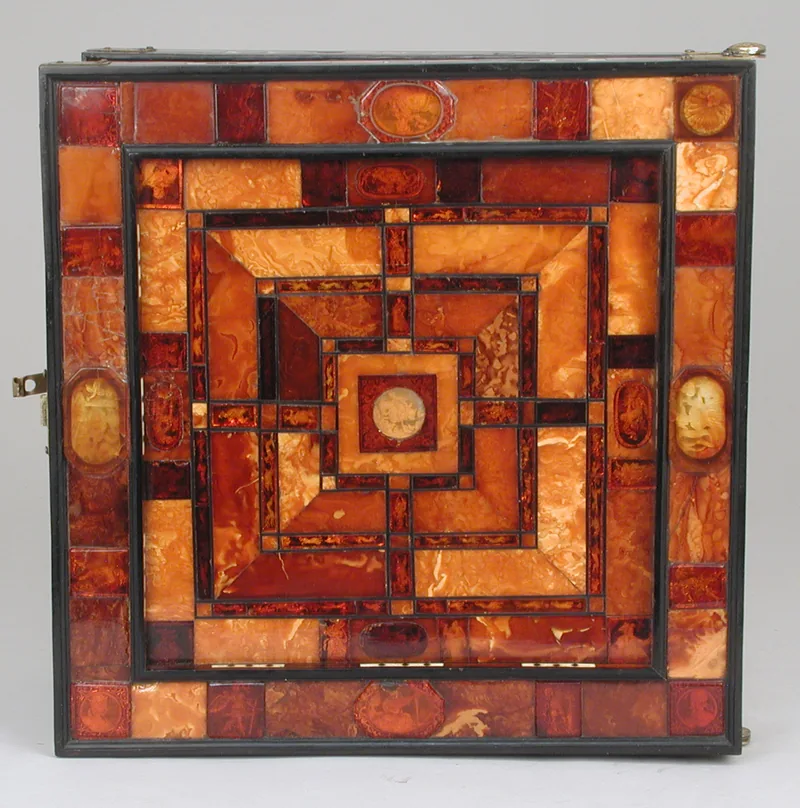
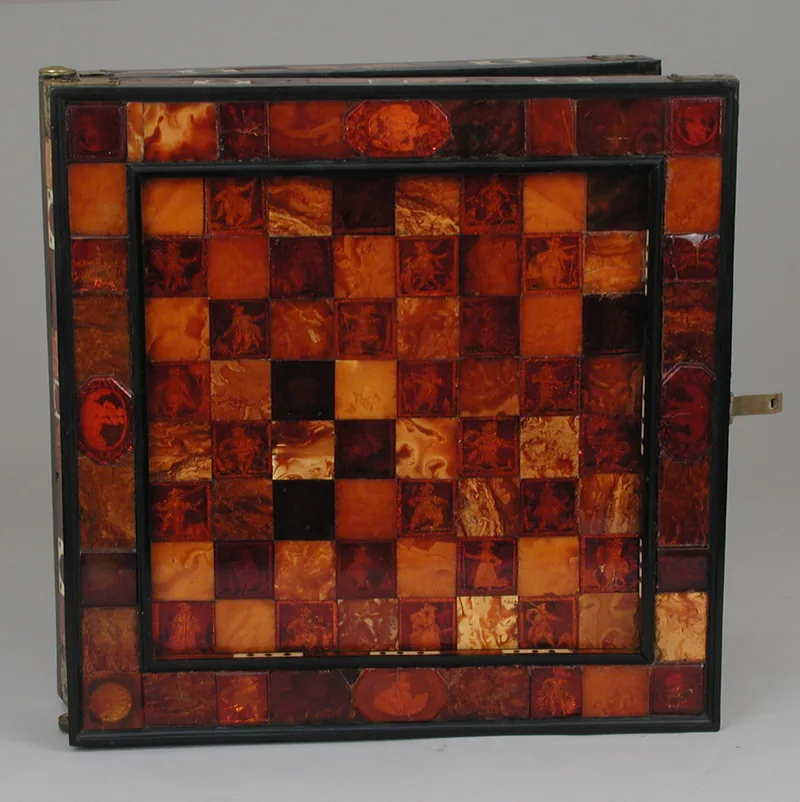
The same official folding idea is visible in the Met box, accession 48.174.41: a closed amber exterior, a chess face, and an open backgammon face whose points, in the still, are empty. [source] Hoyle already knew a board might “answer both purposes.” [source]
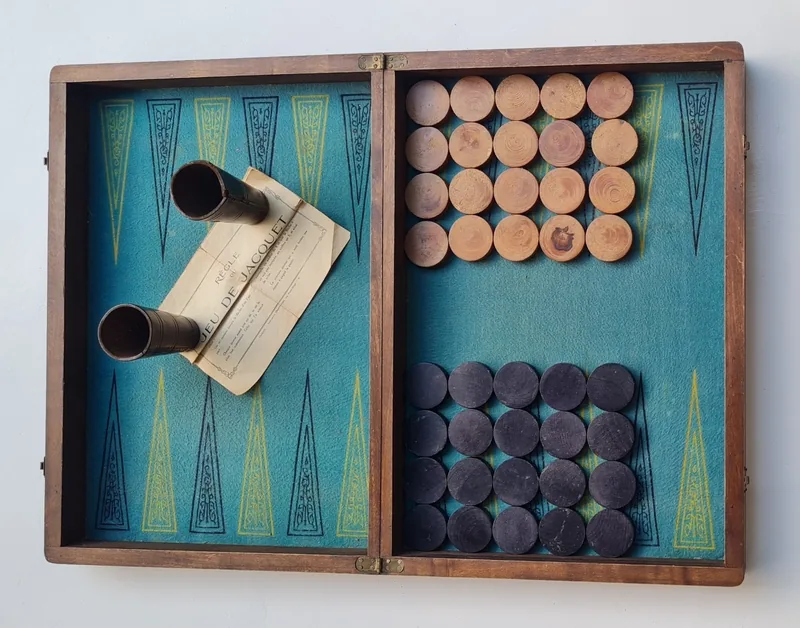
Not every board with points is this game. Edward Werner’s photograph is officially a mid-twentieth-century jacquet board, and the file itself says it is not useful for tric-trac. It hangs here as a neighbour, not as a starting setup. For the official modern equipment list, including the cube that Hoyle does not name, see the fact list.
Enjoyed this desk of a 1909 starting arrangement, three official scores, and related games that are not the same game?
No pop-ups. No intrusive advertising. Just interesting stuff. A little support helps the next learntoplay.im site get built.