Credits
Every photograph on this site
Licences were checked on each source page on 18 November 2026. CC BY and CC BY 3.0 stills are used on the website and credited; they are not placed in the typographic PDFs. CC BY-SA stills are used on the website only, and are not placed in the downloadable fact sheets.
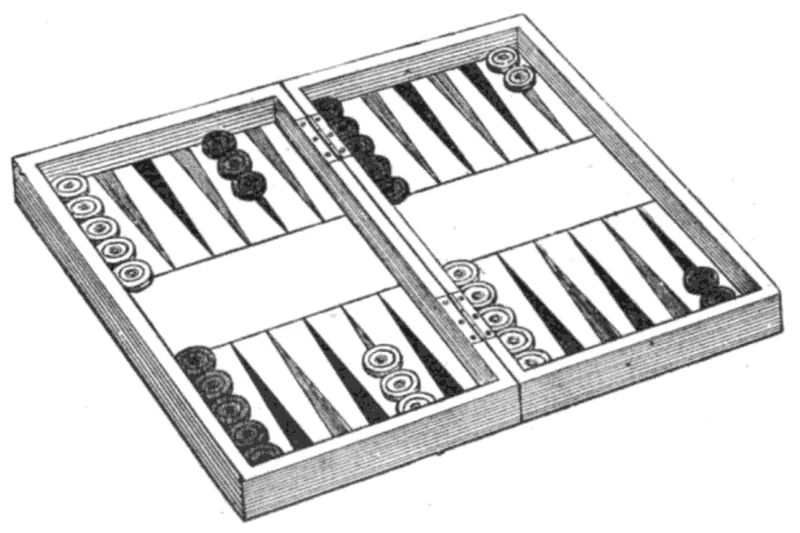
“Backgammon: starting arrangement,” Fig. 1 in Hoyle’s Games Modernized, 1909, “Professor Louis Hoffmann” and Ernest Bergholt. The official 1909 text that accompanies the plate makes the right-hand table the inner or home table. Public domain. Plate: “Professor Louis Hoffmann” (Angelo J. Lewis, 1839–1919) and Ernest Bergholt (1856–1925) · Public domain · Hoyle’s Games Modernized, 1909 / Wikimedia Commons 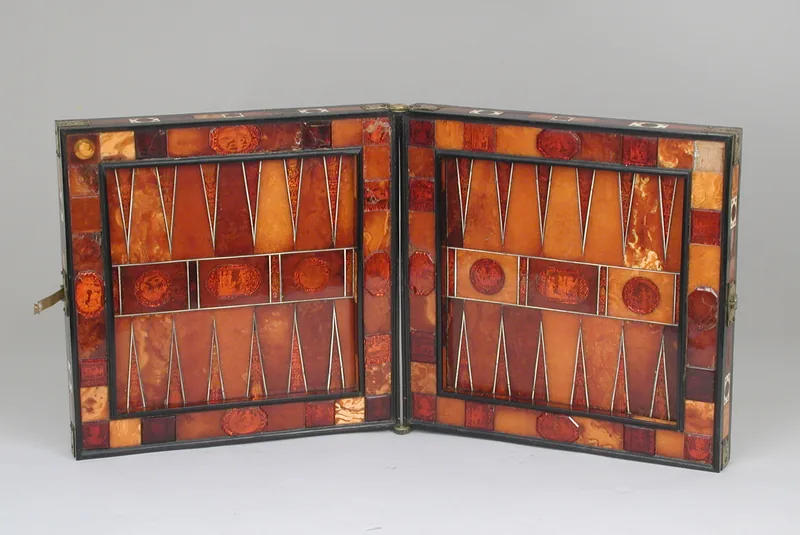
Open backgammon face of a chess and backgammon board, possibly German, Königsberg, 17th–18th century. Accession 48.174.41, Metropolitan Museum of Art, Gift of Gustavus A. Pfeiffer, 1948, as recorded on the earlier notes for this still; the Met collection search API returned HTTP 410 on 18 November 2026, so the collection record was not re-opened. The photograph shows empty points. It is not a starting-arrangement picture, and it is not the chess face of the same box. CC0. Photo: The Metropolitan Museum of Art · CC0 / public domain · Met Open Access, accession 48.174.41 / Wikimedia Commons 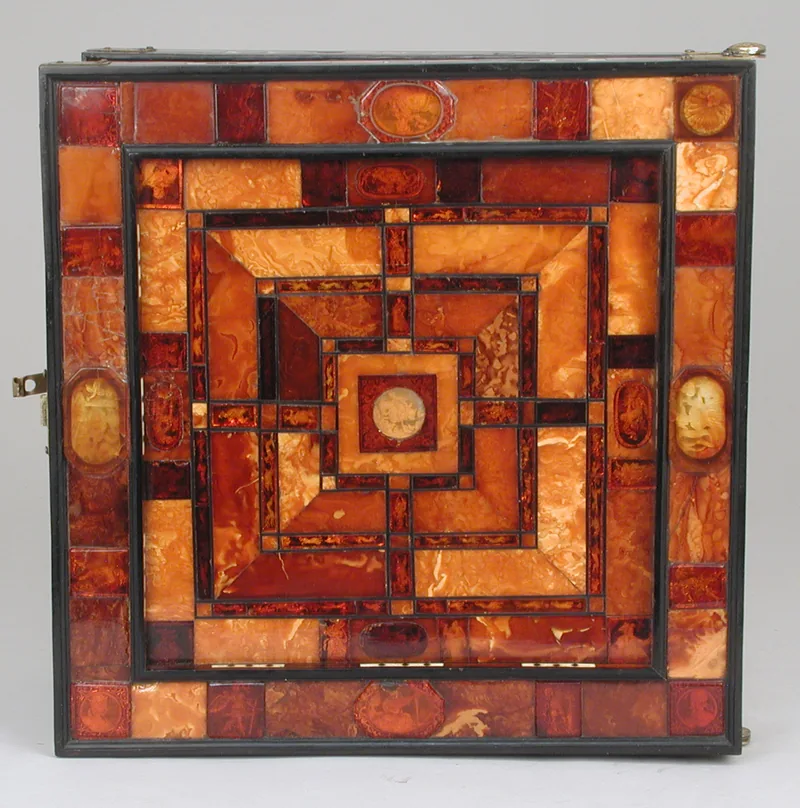
Closed exterior of the same Met box, accession 48.174.41. A photograph of a closed games box, not a board set for play. CC0. Photo: The Metropolitan Museum of Art · CC0 / public domain · Met Open Access, accession 48.174.41 / Wikimedia Commons 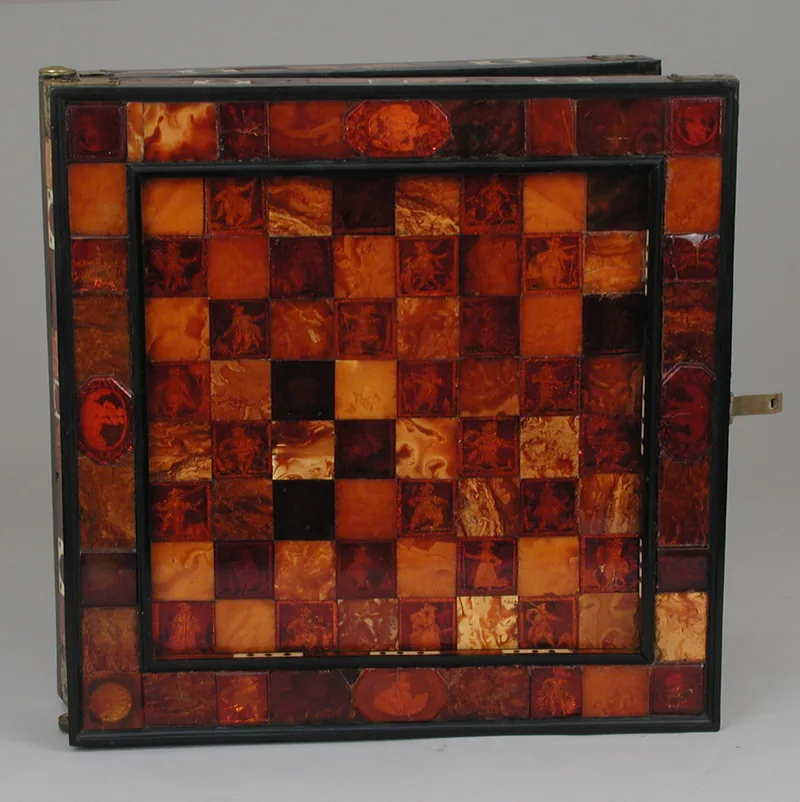
Chess face of the same Met box, accession 48.174.41. Hoyle notes that a folding board may bear “the necessary squares for draughts or chess, so that the one board may answer both purposes.” This still is the chess face, not the backgammon points. CC0. Photo: The Metropolitan Museum of Art · CC0 / public domain · Met Open Access, accession 48.174.41 / Wikimedia Commons 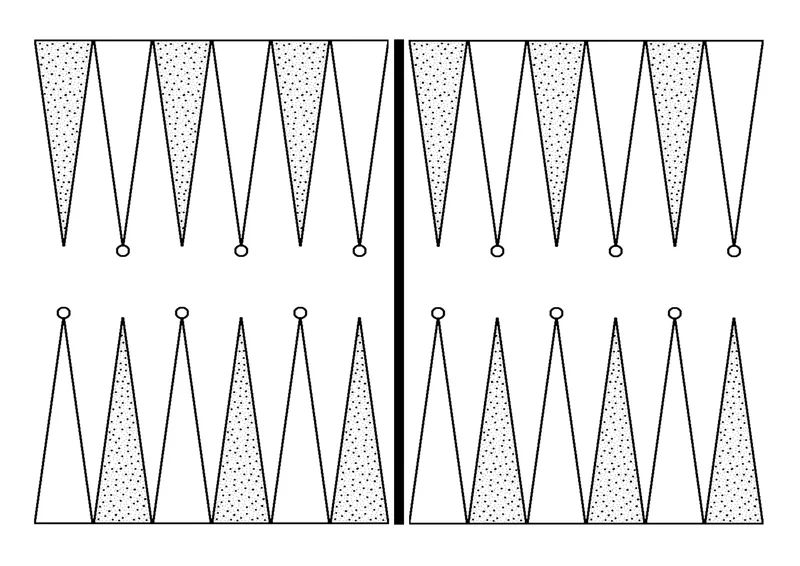
“Backgammon board, printable, and educational,” photographed by Anna Frodesiak on 4 July 2015. An empty twenty-four-point diagram, not a set board. CC0. Photo: Anna Frodesiak · CC0 · Anna Frodesiak / Wikimedia Commons 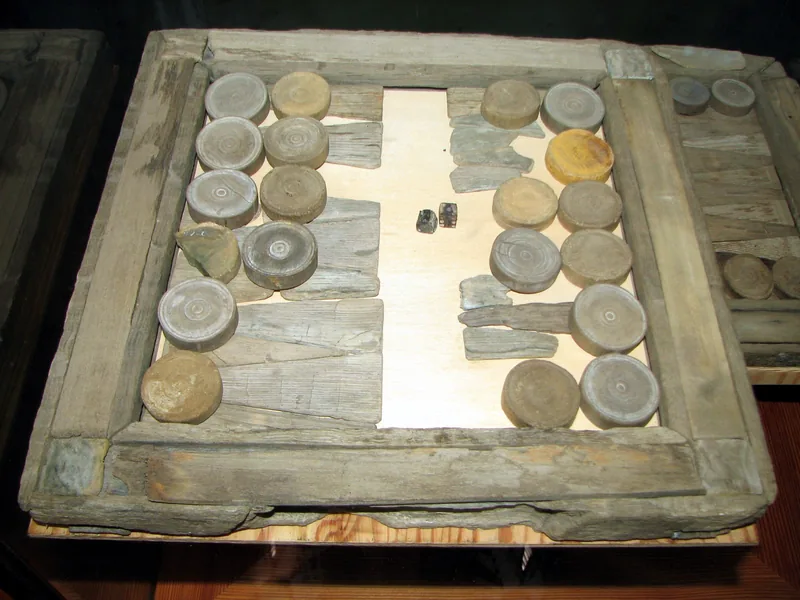
“Old backgammon game recovered from the Vasa, sunk in 1628,” photographed by Chris 73. The file title is kept as written. It is not used as a rule book for modern play, and it is not a 1909 starting-arrangement plate. Used on the website only, under CC BY-SA 3.0. Photo: Chris 73 · CC BY-SA 3.0 · Chris 73 / Wikimedia Commons 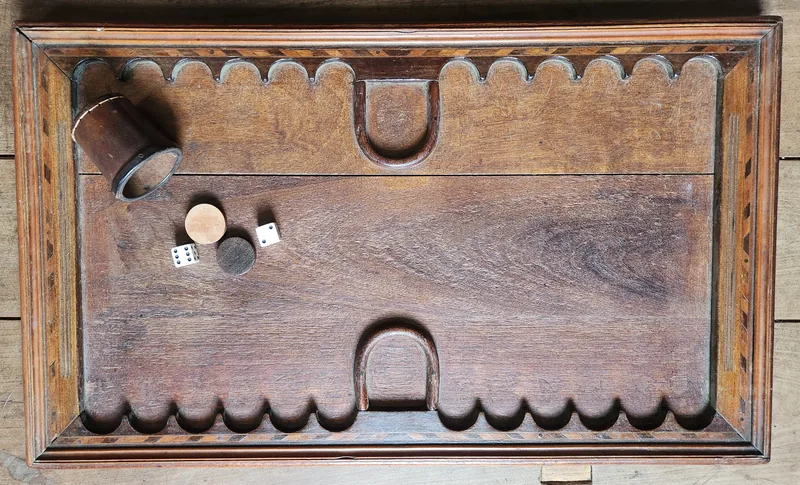
“Tabuleiro de gamão antigo,” photographed by André Koehne. The file describes a late-nineteenth-century board in a medieval style, once the property of the writer João Gumes, and notes that the box, dice and pieces are modern. It is not a medieval board, and it is not Hoyle’s 1909 starting plate. Used on the website only, under CC BY-SA 4.0. Photo: André Koehne · CC BY-SA 4.0 · André Koehne / Wikimedia Commons 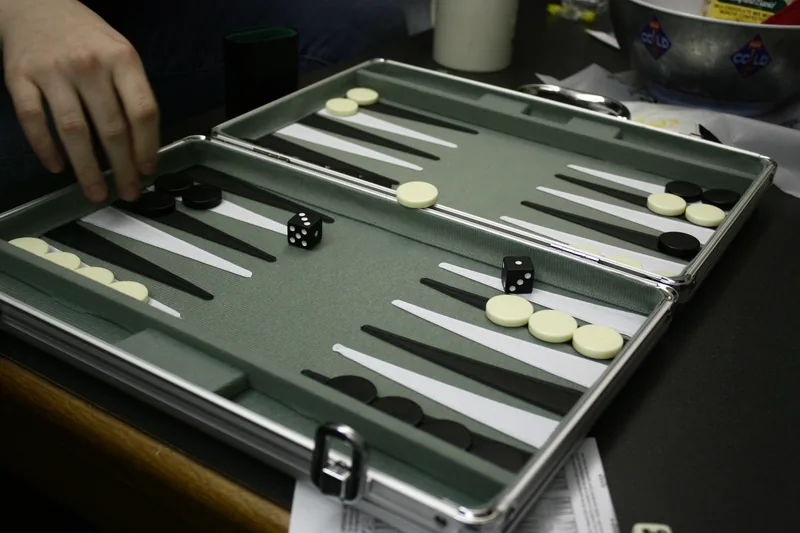
Friends playing backgammon, photographed by Hillary in Atlanta on 26 January 2010. The photographer’s file note says that was the day they learned the game by watching. A living room game, not a tournament still, and not a 1909 plate. Used on the website only, under CC BY-SA 2.0. Photo: Hillary · CC BY-SA 2.0 · Hillary / Wikimedia Commons 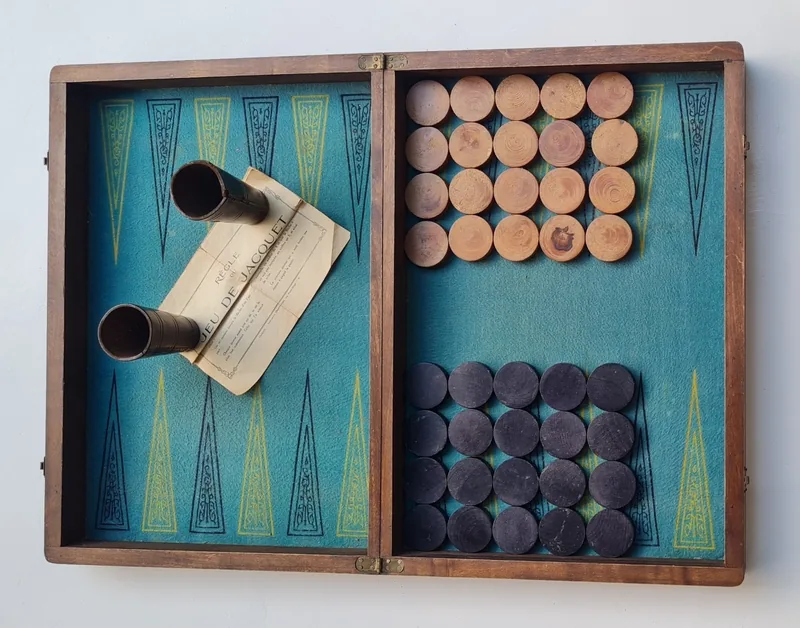
“Un tablier, aussi connu sous le nom «tablier de jacquet»,” photographed by Edward Werner. The official file description says this board “n’est point utile pour jouer au trictrac” and dates it to the 1950s or 1960s. It is not a backgammon starting setup, and it is not treated as a tric-trac board. CC0. Photo: Edward Werner · CC0 · Edward Werner / Wikimedia Commons 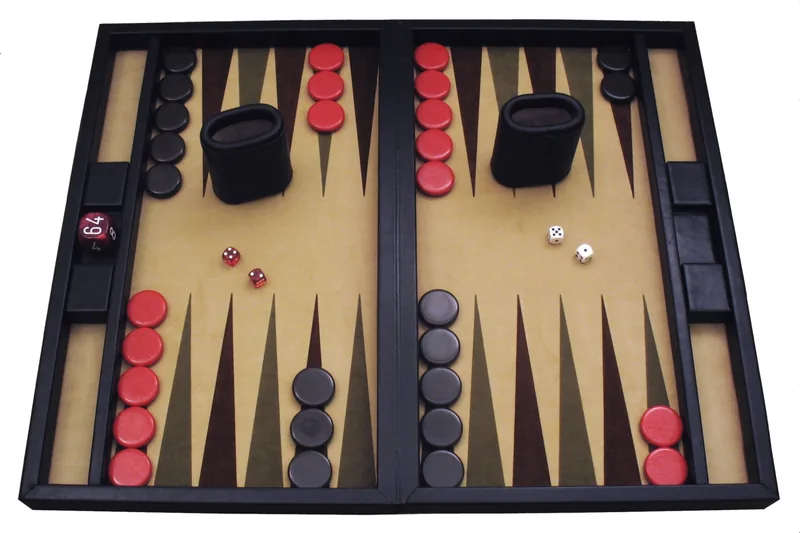
“A contemporary backgammon set,” photographed by Ptkfgs on 26 March 2007. A modern set, not Hoyle’s 1909 apparatus list, which names dice and dice-boxes and does not mention a doubling cube. The cube, marked in the World Backgammon Federation’s captured wording with 2, 4, 8, 16, 32 and 64, belongs to that official modern equipment list. Public domain. Photo: Ptkfgs · Public domain · Ptkfgs / Wikimedia Commons 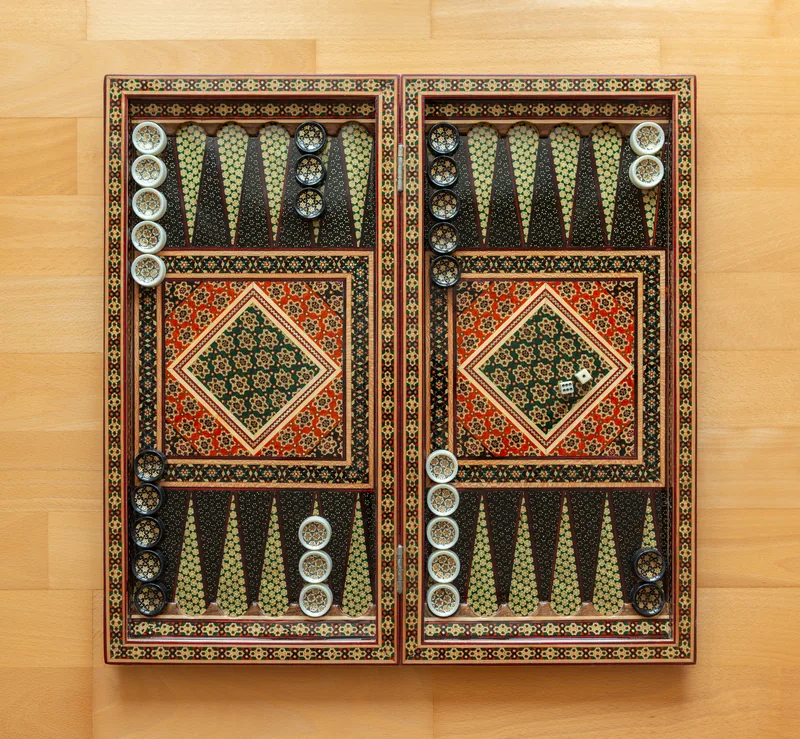
“Persian Backgammon board made in Khatam technique,” photographed by Nikos Kitsakis on 4 March 2023. A decorated empty board, not a starting arrangement, and not used to rewrite any official rule. CC BY 4.0. Photo: Nikos Kitsakis · CC BY 4.0 · Nikos Kitsakis / Wikimedia Commons 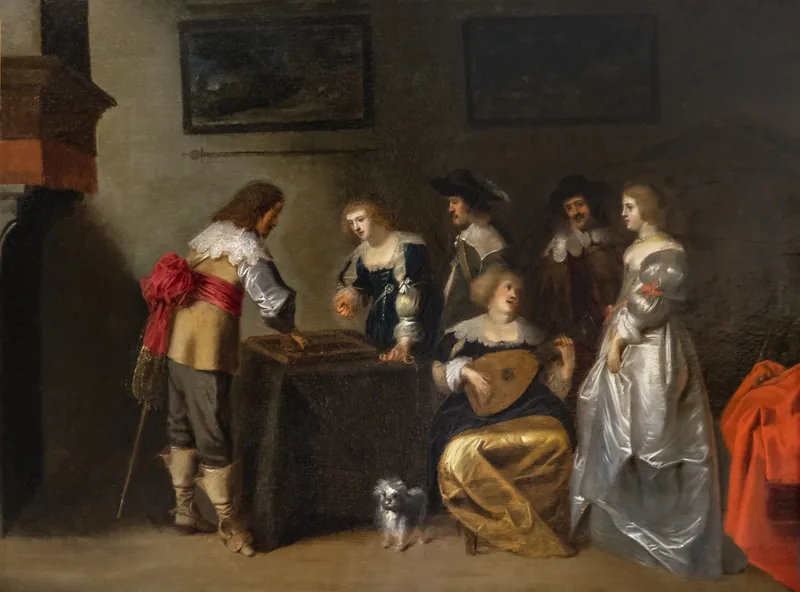
Christoffel Jacobsz. van der Laemen, oil on wood, between 1630 and 1651, Musée Ingres-Bourdelle, Montauban, accession MI.843.1.53, given in 1843. Official titles on the file: “Joueurs de tric-trac” and “Backgammon players.” Both titles are kept. The 1911 Britannica says the French name for backgammon is trictrac, imitative of the rattle of the dice; that etymological sentence is not used to retitle the painting. Photograph by Didier Descouens, 1 February 2020. Used on the website only, under CC BY-SA 4.0. Photo: Didier Descouens · CC BY-SA 4.0 · Didier Descouens / Wikimedia Commons
Enjoyed this desk of a 1909 starting arrangement, three official scores, and related games that are not the same game?
No pop-ups. No intrusive advertising. Just interesting stuff. A little support helps the next learntoplay.im site get built.